China and Japan are the two major "debt holders" of U.S. debt, each once holding over a trillion dollars in U.S. bonds.
However, due to cracks in the credit system of U.S. debt itself, coupled with the never-ending printing of money, the U.S. debt snowball has been growing larger and larger.
Starting from 2022, the two major "debt holders" of China and Japan have been massively selling U.S. bonds, seemingly sending an unusual signal.
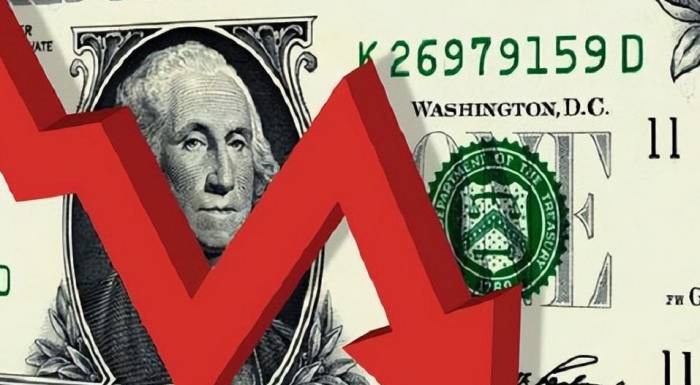
The U.S. debt faces the risk of default.
Over the past 200 years, U.S. debt has not defaulted, but this does not mean that U.S. debt will definitely not default in the next few decades.
Times have changed, and now the scale of U.S. debt has experienced unprecedented growth, especially in the past three years impacted by the pandemic, the U.S. has printed money too quickly, causing U.S. debt to approach the debt ceiling of $31.4 trillion once again.
It is important to note that the U.S. GDP was around $25 trillion last year, and the scale of U.S. debt has already far exceeded its own gross product.
According to past experience, once U.S. debt approaches the debt ceiling, the U.S. starts to adjust the limit and continue to borrow money to develop the economy, in a cycle that seems to render the debt ceiling meaningless.
But this time is different.
The U.S. Congress disagrees on raising the limit, as too much money has been printed in recent years, and if it continues to issue debt, it may not even be able to afford the interest.
Once the credit system collapses, the dollar hegemony built over a century will crumble.
Therefore, the U.S. Congress suggests reducing expenditures in all areas to gradually and cautiously resolve the issue, but the Federal Reserve repeatedly urges to raise the limit, stating that if the limit is not raised, investors will lose confidence, which could trigger a wave of U.S. bond selling and potentially lead to a financial crisis.
If this continues, the risk of U.S. debt default will also greatly increase.
On February 15th, the U.S. Department of the Treasury released the report on international capital flows for December 2022, showing that China and Japan continued to reduce their holdings of U.S. bonds.
Japan reduced its holdings by $6 billion in that month, with a total of $107 billion, reaching a new low in three years.
However, Japan remains the largest overseas holder of U.S. Treasury bonds.
China reduced its holdings by $3.1 billion in that month, bringing its total to $867.1 billion.
China has been reducing its holdings for four consecutive months, reaching a new low in 12 years.
Looking at the entire year of 2022, China reduced its holdings by a total of $173.2 billion in U.S. bonds, while Japan reduced its holdings by $224.5 billion, both exceeding $100 billion.
The two countries combined to reduce their holdings by $397.7 billion in U.S. bonds last year, approaching $400 billion.
Although China and Japan are reducing their holdings, some countries continue to increase their holdings of U.S. bonds.
In December last year, the UK increased its holdings by $8.7 billion, and Belgium increased its holdings by more than $20 billion.
While selling U.S. bonds, China has turned to purchasing a large amount of gold reserves.
In November 2022, China's central bank increased its gold holdings by 1.03 million ounces, continued to increase by 970,000 ounces in December, and added another 480,000 ounces in January 2023.
China has been increasing its gold holdings for three consecutive months.
By the end of January, China's gold reserves reached 65.12 million ounces, with gold reserves exceeding 2,000 tons for the first time.
As the scale of U.S. debt approaches the debt ceiling, China's choice to sell U.S. bonds and increase gold holdings indicates that it is prepared to deal with the potential default of U.S. bonds.
At the same time, the central bank's increase in gold holdings is to enhance the diversification of foreign exchange reserves and strengthen the ability to resist global financial market fluctuations, which is also an effective means to hedge against the devaluation of the dollar.
In fact, not only China, but also central banks around the world are increasing their gold holdings.
According to the World Gold Council, in 2022, the demand for gold reserves by central banks worldwide increased to over 1,000 tons, the highest in more than 50 years.
Central banks of various countries are also avoiding risks and enhancing the diversification of foreign exchange reserves to cope with potential global financial market risks that may arise in the future.





















Join the Discussion