For the country of India, many of our compatriots have a prejudiced impression, after all, the Indian news we often see is quite bizarre and full of points for discussion.
However, speaking from a rational and objective perspective, India is an existence that cannot be ignored in the coming decades, with rapid development in its economy, military, technology, culture, and other aspects.
Population Size First, looking at the population, India is expected to surpass China as the world's most populous country by 2023.
With the potential of being the most populous country, how can we underestimate its development potential!
In 2022, China experienced its first negative population growth, which was both expected and a surprise at how quickly this day has come.
This means that in the future, our country's population will gradually decline each year, with an estimated population of 1.3 billion by 2050, where the elderly will account for one-third of the total population.
Economic Development Next, looking at the economy, India's GDP grew by 7% in the fiscal year 2022.
Both the IMF and the Asian Infrastructure Investment Bank predicted a 7% economic growth rate for India in 2022.
Such a growth level is relatively high globally, but it is a decline for India itself.
The world economy may slow down in 2023, with Goldman Sachs predicting a 6.9% GDP growth for India, but the latest data has been revised down to 5.9%, and the French foreign trade bank predicts a 6.3% GDP growth for India this year.
Data shows that India's GDP overtook the UK in the first half of last year, ranking fifth in the world, and India's economic output continues to grow rapidly.
According to predictions from major international organizations, India's GDP is expected to enter the top three in the world around 2050.
Industrial Development From the perspective of industrial development, many compatriots still have an impression of India in the fields of software and generic drugs.
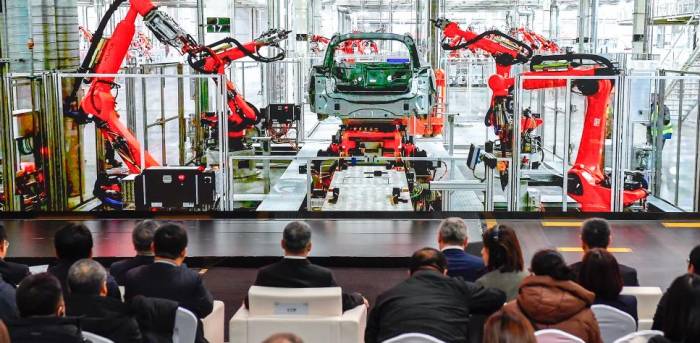
In fact, India's automotive manufacturing, electronics, and other industries are also growing rapidly.
According to reports, India's car sales in 2022 are expected to reach 4.4 million units, surpassing Japan (4.2 million units), making India the world's third-largest car market, following China (24.8 million units) and the United States (13.8 million units).
At the same time, India's car sales growth rate reached 23.4%, far exceeding other countries.
India is also the world's fourth-largest car producer, producing 5 million vehicles in 2022.
In addition, India's electronics manufacturing industry is also developing rapidly.
Since 2023, there have been rampant rumors online about Apple transferring its supply chain to India and Vietnam.
However, Apple's production capacity in India is not high, currently only 5%, but relevant institutions predict that it may reach 25% in the next five years, or even more than 30%.
After all, India is striving to transfer the supply chain of Apple and related companies.
Once Apple transfers some iPhone production lines to India, it will greatly enhance India's electronics manufacturing industry chain and further enhance the technical strength of local electronics companies, potentially replacing imports.
We have done it this way in the past, and India is likely to imitate our successful path.
Globally, China is the only country with a complete range of industries defined by the United Nations, from light industry to heavy industry.
China has all the industrial foundations and capabilities, and the output of many industrial categories is the world's first.
Of course, India is also a country with a complete industrial system.
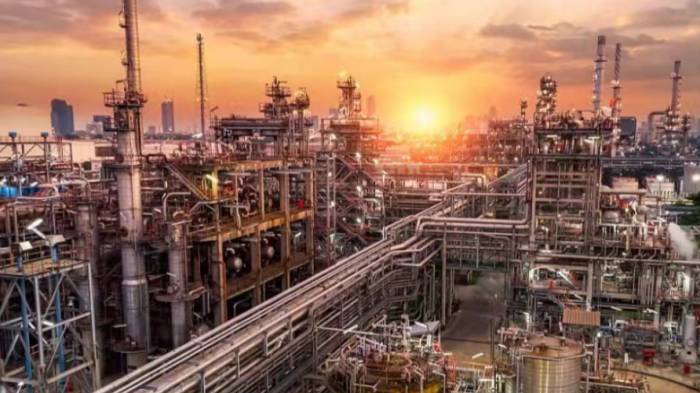
The development level of industries such as automobiles, steel, machinery, chemical, and pharmaceuticals in India is very high, with steel production ranking second in the world.
However, the special aspect of India is that the proportion of industry in GDP is not high.
Over the past few decades, it has focused more on the development of the service industry, and a high proportion of GDP from the service industry is a characteristic of developed countries.
However, India's per capita GDP is only about $2,200.
Therefore, India now places a high emphasis on the manufacturing industry, but land ownership and labor quality are two major "stumbling blocks."
Overall, as the world's fifth-largest economy, India's future development potential should not be underestimated.
Despite various challenges, its enormous potential cannot be completely denied.










Join the Discussion