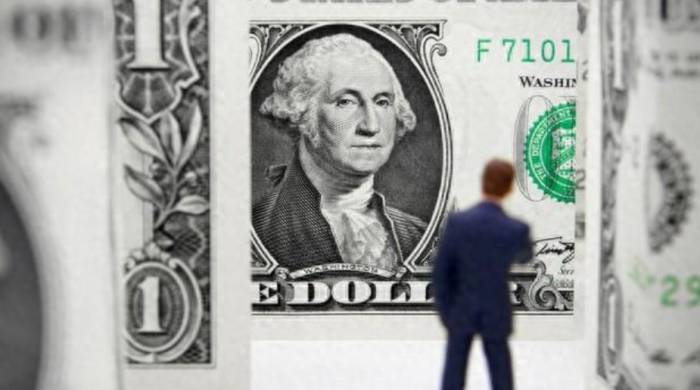
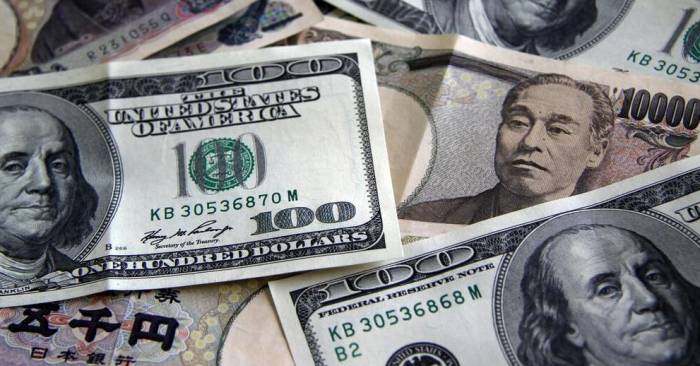
The staggering debt of $35 trillion is like a heavy stone, pressing down on people's chests, making it hard to breathe and constantly worrying about future risks.
Once a giant, now it is burdened with a mountain of heavy debt, staggering.
What's more intriguing is that in this life-or-death financial game, China has become the last straw for the United States.
In this battlefield without smoke, the future is unpredictable, and no one knows where it will go.
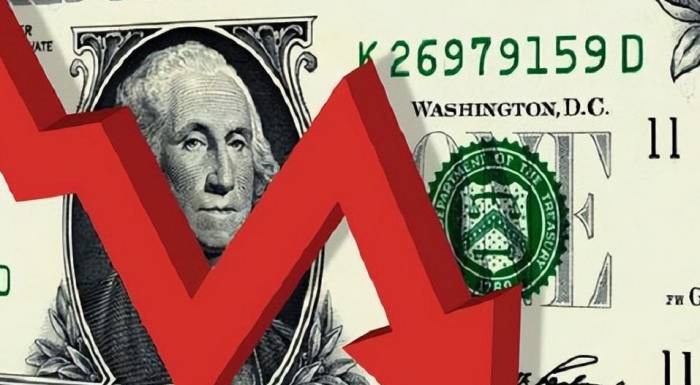
In 2023, the total U.S. debt officially broke through the $35 trillion mark, like a clear dividing line, pushing the United States to the edge of the cliff.
What's more alarming is that this is just the tip of the iceberg.
According to a data report disclosed by the U.S. Congress, by 2033, the total U.S. debt will reach $50 trillion, equivalent to every U.S. citizen bearing a debt of $104,000, including even those homeless vagrants.
The economic crisis is like a time bomb, and once the debt issue becomes the fuse, the consequences will be unimaginable.
It can be said that the U.S. government is now standing on the edge of a cliff, with a huge debt of $35.4 trillion at the bottom of the cliff.
If it cannot resolve the crisis in time, it will be waiting for the abyss of government shutdown.
If this happens, the government's doors will have to be temporarily closed, and those civil servants working for the federal government will have to start a "holiday" without salary.
It can be foreseen that American society will fall into chaos, and its international image will also suffer an unprecedented blow.
What is even more worrying is that the domestic political struggle in the United States is intensifying, and the two parties are collectively silent on the debt issue, trying to pass this hot potato to the next government.
This approach is like sweeping the garbage from your own home to the neighbor's door, which not only cannot truly solve the problem, but will also make the relationship between neighbors more tense, and even trigger greater contradictions.
Moreover, in order to curb inflation, the Federal Reserve has to take interest rate hikes, but this will lead to a slowdown in economic growth, and even trigger an economic recession.
The house is leaking and it's raining at night.
Even the Bank of Japan, which has always been "sitting still," has recently started to quietly raise interest rates, and the interest rate has jumped to 0.25%.
This move is like opening the floodgate of funds, and a large amount of funds may surge to Japan like water, which will undoubtedly add to the troubles of the already troubled U.S. economy.
Under the troubles of internal and external troubles, the U.S. government finally realized that it is powerless to save the day by its own strength, and it must seek external help to get through the difficulties.
In today's world, perhaps only China can bear this responsibility and bring new hope to humanity.
In order to alleviate the pressure of debt, the U.S. government had to lower its posture and take the initiative to show goodwill to China.
Since the beginning of 2024, U.S. officials have visited China in a dense manner, releasing a positive signal of cooperation, trying to get China's support by improving Sino-American relations.
In midsummer, Sullivan, the national security adviser of the White House, embarked on a special journey to China, which attracted global attention.
As a core member of the Biden administration, the purpose of Sullivan's trip is self-evident, that is, to convey the "goodwill" of the U.S. government to China.
In the talks with Chinese officials, Sullivan repeatedly emphasized that the United States has no intention of decoupling from China and hopes to maintain communication and cooperation with China.
As soon as Sullivan left, Kerry, the U.S. special envoy on climate change, followed closely and stepped on Chinese soil again.
The purpose of Kerry's trip is not only to communicate and coordinate with the Chinese side on climate change and other issues, but more importantly, to show the Chinese government that the U.S. government hopes to strengthen bilateral cooperation.
In early autumn, the trade delegations of China and the United States gathered in Washington to start a new round of consultations on economic and trade issues of mutual concern.
At this meeting, the Chinese side once again expressed its concern about the United States' economic and trade policies towards China, demanding that the U.S. side stop the unreasonable suppression of Chinese enterprises and create a good environment for economic and trade cooperation between the two countries.
At the same time, the Chinese side also released some positive signals to the U.S. side, indicating its willingness to carry out economic and trade cooperation with the U.S. side on the basis of equality and mutual benefit.
In order to express the sincerity of cooperation, the U.S. government made some concessions in the talks, agreeing to promote the docking of Sino-American corporate cooperation projects, and said it would seriously listen to the opinions of enterprises.
Some recent operations of the White House team have made people smell a subtle adjustment in their strategy towards China.
On the one hand, the U.S. government still regards China as the main competitor, trying to suppress and contain China in various fields; on the other hand, the U.S. government also realizes that under the current international situation, China and the United States need to strengthen cooperation to jointly face global challenges.
In response to the "goodwill" of the U.S. government, the Chinese government has always maintained a calm and restrained attitude.
The Chinese side clearly stated that it welcomes the U.S. government to take positive measures to improve Sino-American relations, but also pointed out that the U.S. side needs to show more sincerity and practical actions to truly win China's trust.
Specifically, the Chinese government demands that the U.S. government cancel the punitive tariffs imposed on Chinese goods, stop suppressing Chinese high-tech enterprises, and stop interfering in China's internal affairs.
These are all "tigers" on the road of Sino-American relations, and only by removing these obstacles can Sino-American relations truly return to a healthy and stable track.
If China can help the United States get through the current difficulties, it will play a positive role in stabilizing the global financial market and boosting the confidence of the world economy.
But everyone knows that the United States has been treating China as an "imaginary enemy" in recent years, from trade to technology, and even human rights issues, trying to suppress China in various ways.
If we easily agree to the United States' request, it is equivalent to indulging the hegemonic behavior of the United States, which will not be conducive to the long-term development of Sino-American relations.
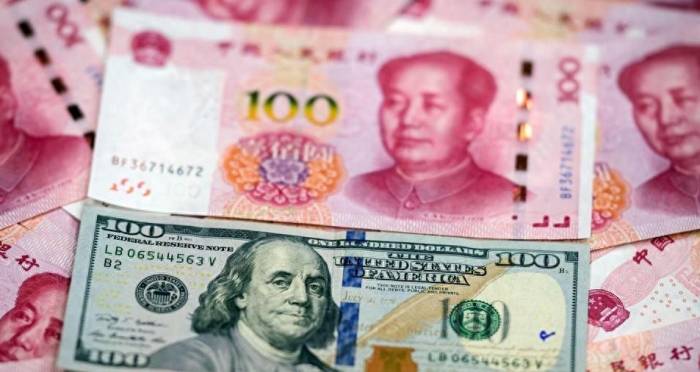
At the same time, in order to get rid of the excessive dependence on the U.S. dollar, China is actively taking action to make the renminbi play a more important role on the international stage.
Now, what is in front of China and the United States is a fork in the road.
One road is to continue to confront, let the suspicion and friction continue to escalate, and finally drag the world into the abyss of the "new Cold War"; the other road is to choose cooperation, face each other's concerns frankly, work together to face common challenges, and create a new situation of win-win cooperation.
It is time for the United States to bid farewell to the old shadows of the Cold War and embrace the new era of win-win cooperation.







Join the Discussion