In 2018, for Vietnam deeply entangled in the "oil dream," it was destined to be a year of shattered dreams.
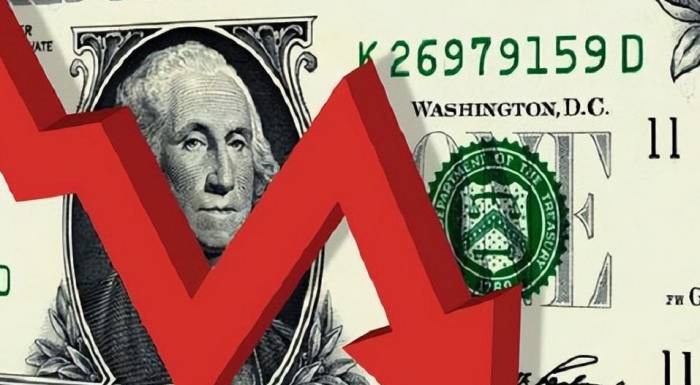
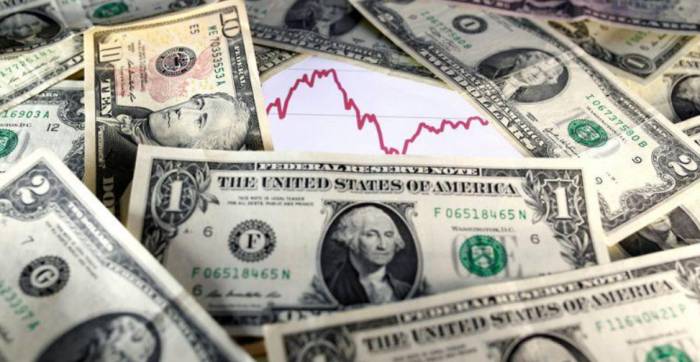
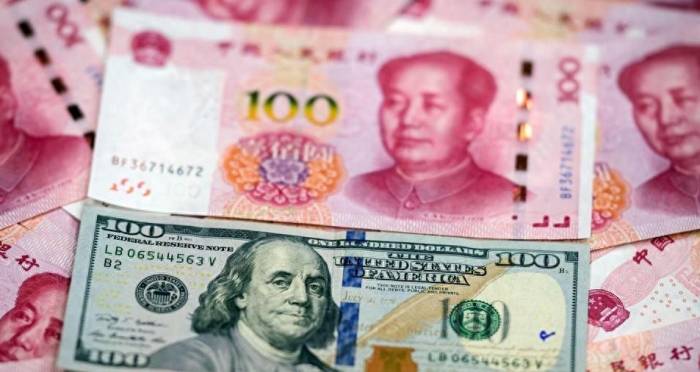
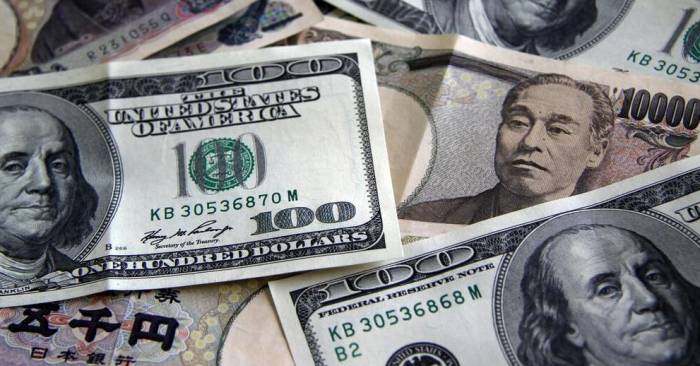
7 billion US dollars, at the exchange rate of that time, was equivalent to more than 50 billion RMB!
Such a huge compensation was enough to crush any Southeast Asian country, and Vietnam was the creator and bearer of this exorbitant penalty.
So, why did Vietnam take risks, risking a huge risk to smuggle oil?
All this has to start with Vietnam's "oil dream."
The South China Sea, this vast sea area of more than 3.5 million square kilometers, is not only an important maritime passage connecting the Pacific and Indian Oceans but also contains extremely rich oil and gas resources, known as the "second Persian Gulf."
Experts estimate that the oil reserves in the South China Sea are at least 20 billion tons, and the natural gas reserves are as high as several trillion cubic meters, accounting for 12% of the world's total, making it a true "treasure trove of marine oil and gas."
Such huge wealth naturally attracts the covetousness of surrounding countries, especially countries like Vietnam, which are relatively resource-poor and have relatively backward economic development levels.
In fact, as early as the 1960s, a report on exploration in the South China Sea area released by the United Nations clearly pointed out that the South China Sea contains rich oil and gas resources.
This news, for Vietnam at that time, was like a bombshell, instantly igniting Vietnam's "oil dream."
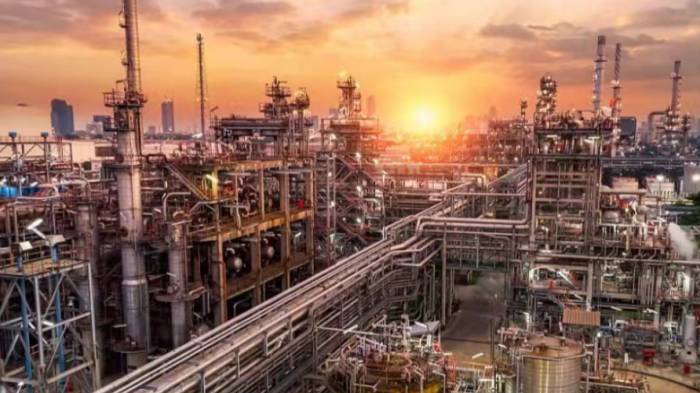
As we all know, oil is known as the "lifeblood of industry" and is an important material basis for a country's economic development and social stability.
However, Vietnam's own oil reserves are very limited and cannot meet the growing domestic energy demand.
Faced with the "treasure trove of marine oil and gas" nearby, Vietnam naturally does not want to let go easily.
Thus, a bold and crazy plan was quietly brewing in the hearts of the Vietnamese government: to smuggle oil from the South China Sea of China!
In order to achieve this "oil dream," Vietnam was meticulous and carefully planned.
In the 1970s, Vietnam began to frequently send out various scientific research ships and exploration ships to conduct large-scale surveys of the South China Sea area of China under the guise of "marine science research."
Their real purpose was not scientific research at all, but to find out the specific location and reserves of the oil fields in the South China Sea of China, preparing for large-scale smuggling in the future.
Entering the 21st century, with the acceleration of the process of economic globalization and the increasing demand for oil resources in the world, the international oil price has soared, which has further stimulated Vietnam's greed.
In order to realize the "oil dream" as soon as possible, Vietnam began to take more radical actions: to actively attract foreign oil companies to cooperate with them in the disputed waters of the South China Sea for illegal development.
Vietnam's approach is simple and crude.
On the one hand, they use the rights to oil and gas resources in the South China Sea in their hands as chips, attracting foreign oil companies to cooperate with them with preferential policies such as high-profit sharing, exemption from income tax, and reduction of import tariffs for oil and gas extraction equipment.
On the other hand, they conceal the true situation of these oil fields from foreign companies, deliberately downplaying the political and legal risks, and packaging them as "huge potential and high returns" investment projects.
Under the offensive of the Vietnamese government's "sugar-coated shells" and "sweet words," many foreign oil companies, especially those who are only interested in profit and lack political sensitivity, have fallen into the trap set by Vietnam and signed cooperation agreements with them.
In this way, under the meticulous planning and covert promotion of the Vietnamese government, a "smuggling feast" targeting the oil resources of the South China Sea of China has opened the curtain.
At the same time, in order to cover up, the Vietnamese government has gone to great lengths.
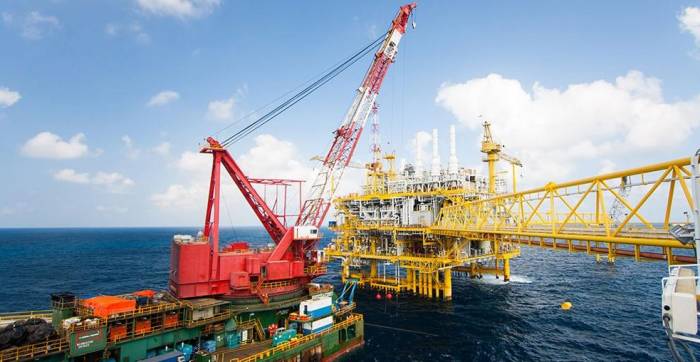
They have established many seemingly legal oil and gas extraction platforms and facilities in the disputed waters of the South China Sea, especially near the nine-dash line of China, to confuse the public and try to deceive the international community.
However, behind these seemingly "legal" extraction activities, there is a huge secret: the Vietnamese government has cooperated with foreign oil companies to secretly lay a large number of oil pipelines on the seabed.
These pipelines are like "underground blood vessels," transporting the oil from the oil fields in the South China Sea of China to the waters controlled by Vietnam.
In this way, while Vietnam is on the surface dealing with China and pretending to abide by international law, it is secretly and crazily smuggling oil from the South China Sea of China and making a fortune.
Due to the underdevelopment of China's satellite remote sensing technology and marine monitoring capabilities at that time, Vietnam's "oil theft" behavior was not discovered in time, which further encouraged Vietnam's arrogance.
According to statistics, from the 1990s to the early 21st century, Vietnam's oil production showed explosive growth.
From a country that originally needed to rely on imports to meet domestic demand, it has become an important oil exporter in the Southeast Asian region.
Its oil export revenue once accounted for more than 30% of Vietnam's fiscal revenue.
The Vietnamese government is ecstatic, attributing all this to their "wise decision-making" and regarding the oil industry as the pillar industry for Vietnam's economic development, investing heavily in support.
However, they seem to have forgotten one thing: sooner or later, you have to pay.
With the rapid development of China's economy and the continuous strengthening of its comprehensive national power, China's determination to maintain national sovereignty and maritime rights and interests has become increasingly firm.
Entering the 21st century, China began to increase investment and construction in the South China Sea, strengthened its military presence in the South China Sea, and took a series of measures to resolutely crack down on any actions that infringe upon China's sovereignty and security.
Vietnam's "oil theft" behavior naturally cannot escape China's "golden eyes."
In 2012, it was a milestone year for China to maintain its rights and interests in the South China Sea.
In this year, Sansha City was officially established, marking a more comprehensive and effective jurisdiction over the islands and adjacent waters of the South China Sea.
At the same time, China has continuously increased the intensity of patrols in the South China Sea, equipped with advanced coast guard ships and warships, and strengthened air patrols and maritime exercises, forming a strong deterrence against illegal occupation and smuggling behavior of countries such as Vietnam.
What makes Vietnam even more uneasy is that China's independently developed "981" drilling platform was officially put into use.
This deepwater semi-submersible drilling platform, known as "Ocean Oil 981," has a maximum working depth of 3,000 meters and a maximum drilling depth of 10,000 meters, representing the highest level of ocean oil drilling platforms in the world at that time.
The emergence of the "981" drilling platform marks a major breakthrough for China in the field of marine oil exploration and development, and also means that China has the ability to develop oil and gas resources in deeper and farther waters of the South China Sea.
This is undoubtedly a heavy blow to Vietnam.
The "981" drilling platform is like a giant "searchlight," exposing the "oil theft" network that Vietnam has been operating for many years.
Those oil fields in the South China Sea, once regarded by Vietnam as "money trees," have now become hot potatoes.
Faced with China's tough attitude and powerful means, the Vietnamese government is not unaware of the seriousness of the problem.
However, the persistent pursuit of the "oil dream" for many years and the greed for huge oil benefits have led them to take risks and continue to rush on the path of smuggling, even fantasizing about being able to pass through.
On the one hand, they deny China in diplomatic occasions, claiming that they are "exercising sovereign rights," and on the other hand, they are trying to attract external forces to internationalize the South China Sea issue and gain more chips for themselves.
However, China's determination to maintain national sovereignty and territorial integrity is unshakable by any country and force.
In 2018, China took decisive action and issued an ultimatum to foreign companies that cooperated with Vietnam in illegal oil development in the disputed waters of the South China Sea: to immediately stop all development activities!
This time, we are not just talking.
In order to maintain national sovereignty and maritime rights and interests, China dispatched more than 40 warships to the disputed waters of the South China Sea, exerting unprecedented military pressure on Vietnam.
Faced with China's powerful military strength and firm determination to defend rights, the Vietnamese government panicked.
They never thought that China would be so serious this time and so ruthless, leaving no room for themselves at all.
Under tremendous pressure, the Vietnamese government finally chose to submit.
They had to order all oil development projects in the disputed waters of the South China Sea to stop and asked those foreign companies that cooperated with them to leave immediately.
This has made those foreign oil companies that cooperated with Vietnam suffer a lot!
They originally thought that the Vietnamese government would, as in the past, deal with China for a while, and finally turn big things into small things and small things into nothing, and they could continue to make a fortune in silence.
However, this time, they miscalculated.
China not only has a tough attitude but also acts decisively, leaving no room for the Vietnamese government to delay and maneuver.
Those foreign companies, especially those that have invested heavily in the disputed waters of the South China Sea, such as the Spanish National Oil Company and the UAE Mubadala Group, have suddenly become "abandoned children" from "honored guests," suffering heavy losses.
The hard-earned investment funds have gone to waste, the carefully formulated development plans have been forced to be interrupted, and the profits have also turned into illusions.
What's more, according to the agreement, Vietnam needs to bear huge compensation liability for breach of contract.
In the end, Vietnam had to grit its teeth and pay 800 million US dollars and 200 million US dollars in huge compensation to the Spanish National Oil Company and the UAE Mubadala Group, respectively, plus some other miscellaneous fines and liquidated damages, totaling more than 7 billion US dollars.
The news shocked the world.
No one expected that Vietnam, which has always been known for its "cleverness," would fall so heavily this time, not only breaking the "oil dream" but also losing so much money, which can be described as losing both the wife and the soldiers, and stealing chickens without losing rice.
The turmoil in 2018 sounded the alarm for Vietnam's "oil dream" and also served as a warning to those countries and forces that are trying to fish in troubled waters in the South China Sea.
China's determination to maintain national sovereignty and territorial integrity is unshakable, and any attempt to challenge China's bottom line and harm China's interests will be resolutely countered.当然可以,不过您还没有提供需要翻译的内容。请提供您想要翻译的文本,我会帮您翻译成英文。










Join the Discussion