In 2021, the international iron ore price once soared to a historical high of $183 per ton.
At that time, Australia seemed to be sitting on a mountain of gold, with wealth flowing in.
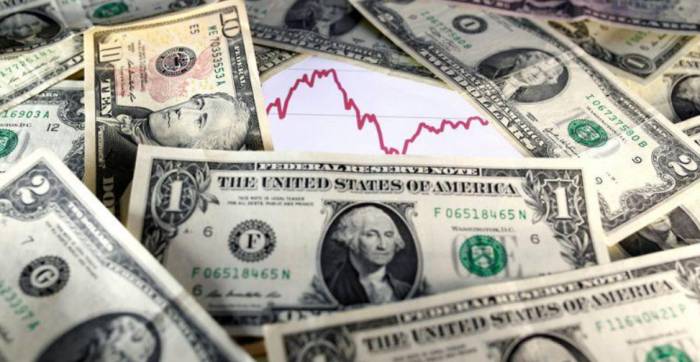
However, fortune's wheel turned, and in 2024, the iron ore price was like a roller coaster, falling all the way, breaking below the $100 per ton threshold.
By August, the price had fallen to its lowest point, only $81.80, more than a third lower than before.
Australian Treasurer Jim Chalmers publicly stated that due to the slowdown in demand from China, the price of Australian iron ore has fallen, and the fiscal deficit may reach 4.5 billion Australian dollars.
Once a sought-after commodity, how did it suddenly become unwanted?
Australia, known for its abundant resources, is called the country "riding on a mining cart."
This land has rich underground treasures, including iron ore, coal, and natural gas, which have injected strong momentum into its economic development.
Among Australia's most formidable resources is iron ore. Data shows that Australia's iron ore export volume accounts for more than one-third of the global total, and China is its largest buyer, with annual imports from Australia accounting for more than 60% of its total imports.
Australia's iron ore resources are abundant, which has allowed it to develop a very successful industry over the past few decades.
The quality of Australia's iron ore is high, with iron content generally above 65%, making it one of the highest quality iron ores in the world.
Moreover, most of Australia's iron ore mines are distributed in shallow layers near the surface, making them easy to mine, and they are close to ports, resulting in lower transportation costs.
In addition, Australia has a well-developed infrastructure and a mature market operation system, all of which provide strong support for the rapid development of its iron ore industry.
However, over-reliance on resource exports has also put the Australian economy in an embarrassing situation where it can be both made and broken by the same factor.
In recent years, with the change in the international market environment, the fluctuation of iron ore prices has intensified, and the Australian economy has also gone up and down.
This year, the price of iron ore has been falling, which has made the Australian economy a bit hard to bear.
On the one hand, the decline in iron ore prices has led to a sharp decrease in Australia's fiscal revenue.
As an important source of fiscal revenue for the Australian government, the reduction in iron ore export tax revenue directly affects the government's fiscal expenditure capacity, limiting its investment in infrastructure construction, social welfare, and other areas.
On the other hand, the decline in iron ore prices has also impacted Australia's job market.
The iron ore business is not easy to do, and many mining companies have had to lay off employees.
Now that there are more unemployed people, society has become less stable.
Faced with the predicament brought about by the decline in iron ore prices, the Australian government seems a bit at a loss.
On the one hand, they try to shift the blame to China, claiming that the slowdown in China's economic growth has led to a decrease in demand for iron ore. On the other hand, they actively seek to strengthen cooperation with other countries and regions, hoping to open up new markets to reduce dependence on the Chinese market.
China is the world's largest steel manufacturer and also a major consumer of steel, which has always required a large amount of iron ore.
Since the reform and opening up, China's economy has developed rapidly, and the demand for steel in industries such as infrastructure construction and real estate development has continued to grow, making China a "hot cake" in the global iron ore market, regarded by Western countries as a "lamb to be slaughtered."
In order to obtain high profits, international mining giants such as BHP Billiton, Rio Tinto, and Vale have long implemented unfair pricing mechanisms for China, continuously pushing up the price of iron ore, bringing heavy cost pressure to China's steel industry.
Data shows that from 2001 to 2021, China has imported more than 13 billion tons of iron ore, spending more than 170 billion US dollars, equivalent to contributing more than 100 billion US dollars in profits to global iron ore enterprises.
Faced with the "stranglehold" of Western countries on iron ore prices, China did not sit idly by, but actively sought to break through, gradually transforming from the "world's factory" to the "market leader."
China is trying to mine more iron ore by itself, so as to rely less on imports.
Although China has a lot of iron ore resources, most of them are relatively "lean," difficult to mine, and high in cost.
To this end, China has continuously increased its investment in technology, improved mining technology, and increased the efficiency of resource utilization.
It has also actively explored the use of high-quality overseas resources to make up for the insufficiency of domestic resources.
In order to reduce dependence on foreign iron ore, China actively seeks new mineral resources overseas, striving to break the dominant position of Western countries in the iron ore market.
In recent years, Chinese enterprises have actively "gone global," investing in the development of iron ore resources in Africa, Latin America, and other regions, and have achieved significant results.
For example, the Simandou iron ore mine in Guinea, in which China has participated in investment and development, is currently the largest undeveloped iron ore mine in the world with proven reserves, with an expected annual output of 150 million tons, which will become an important source of China's iron ore imports.
In addition, China is also actively developing a circular economy and increasing the utilization rate of scrap steel to reduce dependence on imported iron ore. China is a global steel giant, and the amount of scrap steel produced every year is not small.
In recent years, China has continuously improved its scrap steel recycling system, encouraged enterprises to increase the use of scrap steel, and formulated relevant policies to restrict high-pollution, high-energy-consuming steel production capacity, promoting the green transformation and upgrading of the steel industry.
China's "combination of punches" in the field of iron ore has not only safeguarded its own interests but also had a profound impact on the global iron ore market pattern.
China has broken the monopoly of Western countries on iron ore prices, promoting iron ore prices to return to rationality, and maintaining the fair competition order of the international market.
At the same time, China's investment in the development of iron ore resources overseas has brought development opportunities to resource-exporting countries, promoting local economic development and the improvement of people's livelihoods.
Looking back at the history of Sino-Australian relations, it can be described as ups and downs, intriguing.
In the 1970s, China and Australia officially became friends, and since then, the relationship between the two countries has entered a new stage.
At that time, Australian Prime Minister Whitlam bravely opened trade with China under pressure from the United States, which was a pioneering move!
This move allowed the two countries to start more than thirty years of friendly cooperation, and the relationship has always been close.
At that time, the two countries were determined to make each other's lives better, and they cooperated vigorously in the fields of economy, culture, and education, and finally, they all lived a good life.
It can be said that China's reform and opening up has allowed Australia to see many new business opportunities.
China's economic development cannot be separated from Australia's help, whether it is iron ore, coal, or agricultural products, all are continuously transported from Australia to China, injecting vitality into China's economic development.
However, as China's comprehensive national strength continues to improve, the international pattern has undergone profound changes, and Sino-Australian relations have gradually deviated from the "honeymoon period" and entered a "new normal" with constant friction.
The most fundamental reason is that Western countries led by the United States are anxious and uneasy about China's rise and attempt to contain China's development through various means.
As a staunch ally of the United States, Australia naturally follows the United States' pace and adopts a more hardline stance in its China policy.
From the South China Sea issue to the Taiwan Strait issue, from Huawei 5G to the origin of the new crown epidemic, Australia has repeatedly provoked trouble on issues involving China's core interests, seriously damaging the political mutual trust between China and Australia.
The Australian government has recently set some obstacles for Chinese enterprises to invest in Australia and has canceled the "Belt and Road" cooperation agreement with China in the name of national security.
These actions have made Sino-Australian relations a bit tense.
On the issue of iron ore, Australia also tries to attribute its own economic predicament to China.
Faced with the decline in iron ore prices, the Australian government not only did not reflect on its own single economic structure and over-reliance on resource exports, but also accused China of "reducing iron ore imports" and "manipulating market prices," trying to shift the blame to China.
However, the facts speak for themselves.
China has always adhered to the concept of win-win cooperation and actively participated in global economic development, demonstrating the responsibility of a responsible power.
China's appetite for iron ore is really not small, and it is still growing!
To ensure economic development, Chinese enterprises are actively looking for more places to import iron ore.
The Australian government's "scapegoating" behavior is not only useless in solving the problem but will also further damage Sino-Australian relations, and ultimately harm Australia's own interests.
The fluctuation of iron ore prices is just a small episode in the development process of Sino-Australian relations.
Looking to the future, there are still extensive common interests and cooperation space between China and Australia.
How to "rectify the chaos" and promote Sino-Australian relations back on track is an important issue facing both countries.
But the most important point is that the Australian government needs to face China's development, abandon the concept of "Cold War thinking" and "zero-sum game," and treat China with an attitude of "equality and respect" and "mutual benefit and win-win."
Australia should recognize the trend of the times, not "take sides," and not "rely on foreign power," but should independently formulate policies towards China that are in line with its own interests.
China and Australia both need to talk more to enhance mutual understanding and trust.
Both sides should maintain exchanges, strengthen exchanges and cooperation in various fields, properly manage differences, and avoid misunderstandings and misjudgments.
China and Australia should work together to explore new areas of cooperation, so that both sides can benefit from it.
In addition to traditional economic and trade cooperation, the two countries can also tap the potential for cooperation in the fields of scientific and technological innovation, climate change, and cultural exchanges to create more highlights of cooperation and inject new momentum into the development of bilateral relations.
The story of iron ore continues, and the future of Sino-Australian relations is also full of unknowns.Here is the translation in English: However, one thing is certain: Only by adhering to the principles of mutual respect, equality, and mutual benefit can we promote a healthier and more stable development of the relationship between China and Australia.







Join the Discussion