Here is the translation of the provided text into English: There are reports that a press conference will be held at 9 am tomorrow (Tuesday), and expectations are high.
Is this about reducing the interest rates on existing mortgages?
If true, this could be a significant shift in economic development thinking, and Liu Shijin's proposed "10 trillion stimulus plan" might have a chance of being implemented.
Of course, we should not hold our breath, as the event will be attended not only by the central bank governor Pan Gongsheng but also by the director of the State Administration of Financial Regulatory Affairs Li Yunze and the chairman of the China Securities Regulatory Commission Wu Qing.
Their main task is to introduce the situation concerning financial support for high-quality economic development.
What we can do is to look for signals of reducing the interest rates on existing mortgages among the speeches.
Why is reducing the interest rates on existing mortgages important and indicative of a change in economic development thinking?
Previously, what did our economic development rely on?
The confidence of entrepreneurs.
Academically speaking, it's about breaking supply constraints or focusing on the supply side.
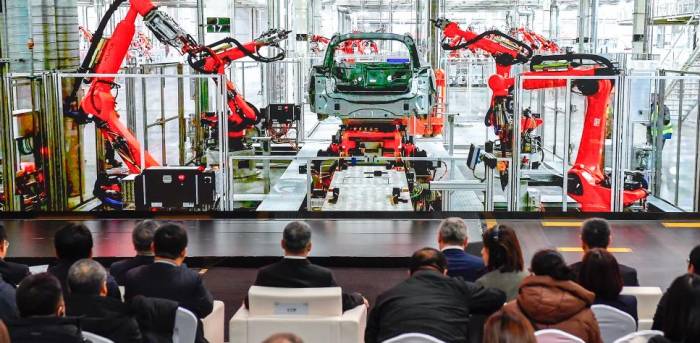
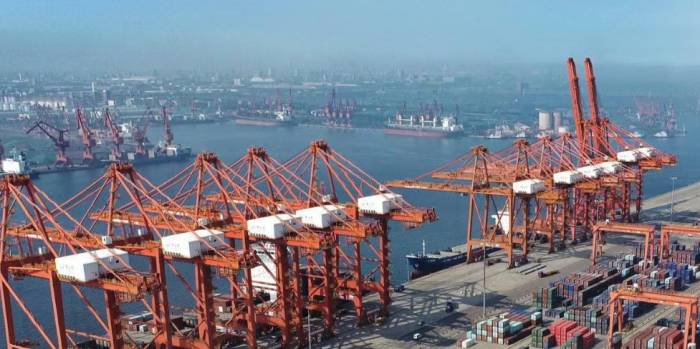
After so many years of development, we have become a global manufacturing powerhouse, the "world's factory."
Most of our preferential policies are also aimed at businesses, such as subsidies for new energy and the semiconductor industry.
On the contrary, we rarely introduce policies aimed at the general public.
Even when we do, such as the appliance rural promotion, it's more about extracting more money from the people, making them contribute more.
That is, giving you a $100 discount with the aim of getting you to spend an additional $900.
There are relatively few policies that truly benefit the people and protect the demand side.
Reducing the interest rates on existing mortgages is a policy that benefits the people and truly protects the demand side because it directly subsidizes the interests of the banking industry to the people.
This is what we have always advocated: only by protecting consumer confidence and relying on ordinary people can we save the economy.
Recently, Liu Shijin, the former deputy director of the National Development Research Center, also put forward a similar view.
He published an article titled "At a Critical Moment, It is Recommended to Form an Economic Stimulus Scale of No Less Than 10 Trillion."
The article has several key points: 1.
Source of funds: Mainly raise funds by issuing ultra-long-term special government bonds to form an economic stimulus scale of no less than 10 trillion within one to two years.
2.
Direction of stimulation: This time, the focus is on making up for the shortcomings in basic public services.
First, significantly improve the level of basic public services such as affordable housing, education, healthcare, social security, and elderly care for new citizens, mainly migrant workers in cities.
The short-term focus is for the government to purchase unsold housing and convert it into affordable housing for new citizens.
Second, accelerate the construction of small and medium-sized towns within the scope of metropolitan areas to drive China's second wave of urbanization and form a high-quality, sustainable modern urban system based on the integration of urban and rural development.
3.
Goal: Strive to double the size of the middle-income group in about ten years, increasing from the current 400 million to 800-900 million.
In summary, Liu Shijin's approach still relies on the framework of urbanization.
The vigorous real estate industry has already taken care of the hard installations such as steel and concrete, but there is still less protection for the people living inside, such as healthcare, elderly care, and education.
Although the people have moved into high-rise buildings, their other protections have not been covered.
How should they be protected?
The state steps in and invests 10 trillion in funds for large-scale investment and subsidies.
Note that the policy he proposed to benefit the people is still led by the state, controlling every aspect of how the money is spent.
How to evaluate his suggestion?
1.
Some of the judgments are correct.
For example, in the past, we focused on the economies of scale and agglomeration effects of production, neglecting the economies of scale and agglomeration effects of consumption, especially service consumption.
This should be a fundamental logic that we need to pay high attention to at this stage to expand consumption.
2.
It's better to try than not to do anything, and it is indeed a policy that benefits the people, which is a good thing.
It is very likely that this will also stimulate economic growth.
3.
This approach of the big parent managing everything will definitely have low efficiency in resource allocation and may also lead to resource misallocation.
It's not that people are getting rich all at once, but that although they are getting rich, they are not bringing much welfare to the people.
4.
However, this policy suggestion also has some problems, such as relying on consumers not thoroughly, still belonging to the big parent style, making decisions for the people.
This will lead to "good intentions, but not well implemented," which is actually low efficiency in resource allocation.
For example, the state wants to invest in education and healthcare, which is indeed a policy that benefits the people, but it only increases schools, teachers, hospitals, doctors, and even expands the coverage of medical insurance, etc., but the miscellaneous fees are higher, the price of medicines is more expensive, and the medical services are over-treated, etc., the people seem to get benefits on the surface, but in fact, they pay a greater price.
5.
We believe that the market is more efficient in resource allocation.
Since economic growth depends on the people, and the economic growth model is driven by consumers, then fully trust the consumer's choice, and the state only needs to consider how to give money to the people.
We have discussed in the article "Saving the Economy, There is Still an Ultimate Move": the United States, Japan, etc., they all directly give money to the people, fully trust the people's ability, this is the most efficient method of resource allocation.
For example, the United States, in the more than 5 trillion US dollars of the epidemic rescue plan, the household sector obtained 1.8 trillion US dollars, accounting for more than one-third; businesses obtained 1.7 trillion US dollars, accounting for one-third.
Other rescue plans are mainly used in medical care and industries severely affected by the epidemic, such as transportation.
See, the money the United States made by MMT, the money subsidized to the American people accounted for 1/3, the money subsidized to American businesses accounted for 1/3, and the rest went to infrastructure and so on.
Japan also got the money, almost the same, the money is almost all subsidized to the people.
In the 79 trillion fiscal expenditure, 22.1 trillion was used to subsidize small and medium-sized businesses affected by health events, 29.1 trillion was subsidized to electricity, gas, oil and so on, and 19.8 trillion was subsidized to children under 18 and so on.
The rise of the American economy and the hot job market, from the perspective of capital flow, is: the central bank's money - first goes to the government - goes to Japanese consumers - through consumption, the money goes to Japanese enterprises.
In summary: For our country's current macroeconomic situation, everyone basically has a consensus, supply constraints are basically gone, the biggest problem now is overcapacity, so it needs to start from the demand side.
Breaking the demand constraint is to protect the confidence of the vast majority of the people, and change the idea of subsidizing enterprises to subsidizing consumers.
The best way to subsidize consumers is to rely on the market, give money to the people, let them spend as they like, rather than find an enterprise to spend money for them in the name of being good for them.
I hope to reduce the interest rates on existing mortgages as soon as possible, and I hope to change the economic development thinking as soon as possible.



















Join the Discussion