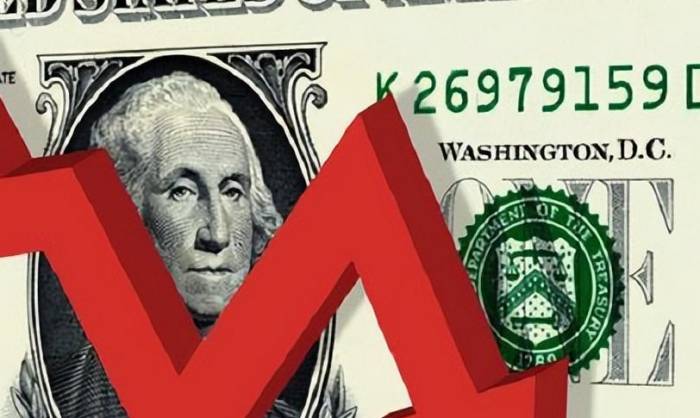
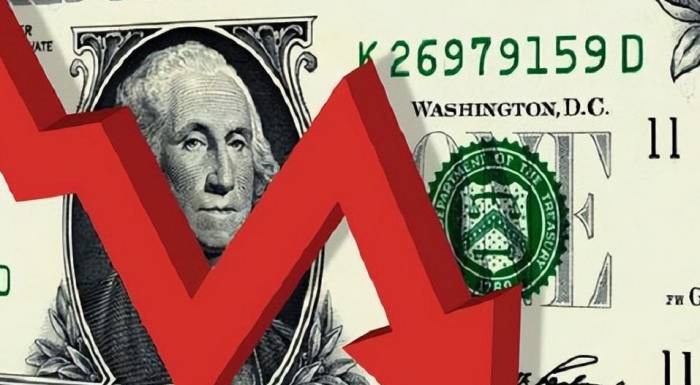
This year, the United States has accumulated a staggering national debt of $34 trillion, which is by no means a small sum.
In other words, the average American is burdened with more than $100,000 in debt.
This is not a trivial amount, and what's worse, the U.S. fiscal revenue for 2023 is only slightly over $4 trillion, while expenditures soar to over $6 trillion.
The fiscal deficit is like a bottomless pit, increasing at a rate of trillions of dollars every year.
It's clear to everyone that the current approach of the United States is somewhat risky.
In order to survive, they are resorting to their old tricks - financial warfare, trying to extract money from the world to fill their own gaps.
This time, however, they have met a tough opponent.
The U.S. approach to financial warfare, to put it bluntly, is to "give you candy first, then stab you in the back."
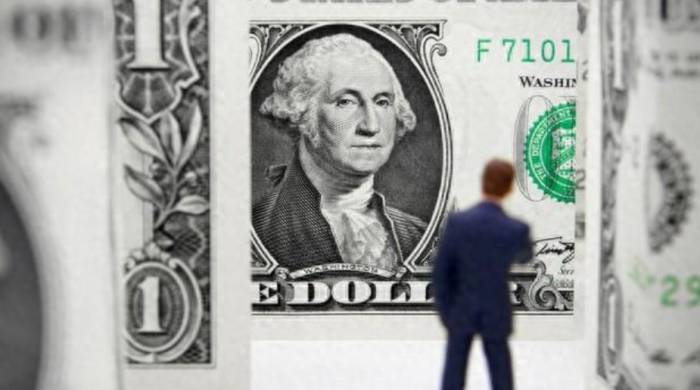
They first push the interest rates on the dollar to extremely low levels, spreading them around as if they were free, attracting businesses to borrow in dollars.
Once businesses have invested the borrowed money and the scale of dollar assets has expanded, the U.S. shows its teeth and begins to aggressively raise interest rates.
The dollar appreciates, capital flows back, and those countries and businesses that are heavily indebted in dollars are left in a daze.
With currency devaluation and asset shrinkage, they can only watch helplessly as their high-quality assets are scooped up by the U.S. at bargain prices.
Latin America, Japan, Southeast Asia - these former economic stars have all suffered at the hands of the U.S. and have been brutally harvested.
This time, the U.S. tried to trip up China, only to be met with a wall.
China's strength is growing stronger and stronger, and it is no longer a country that can be underestimated.
Its vast foreign exchange reserves and a strong manufacturing base have made the U.S.'s attempt to overturn China's economy through dollar tides fail.
What's more worrying for the U.S. is that not only has China withstood the pressure, but it has also begun to counterattack.
On the one hand, China is actively promoting the internationalization of the yuan and providing dollar loans and currency swap agreements to other countries, which is equivalent to cutting off the U.S.'s financial path and weakening the hegemonic status of the dollar.
On the other hand, China has not, as the U.S. expected, invested heavily in the real estate market to save the market, but has focused on the development of the real economy and technological innovation.
The U.S. tried to suppress China through financial means, but it failed and ended up in a dilemma.
If they raise interest rates, the domestic banking system is on the brink of collapse, corporate financing costs soar, and economic development is suppressed; if they lower interest rates, the dollar depreciates, and the previously returned capital will retreat like a tide, and the false prosperity that the U.S. has painstakingly created will also turn into a bubble.
Unable to win the financial war, the U.S. is getting a bit anxious.
They are not willing to give up and even more unwilling to watch China rise, so they start looking for breakthroughs everywhere, trying to drag China into the quagmire.
The real estate market has become their target.
In August of this year, the International Monetary Fund unexpectedly suggested that China invest $1 trillion in the real estate market.
Of course, behind this, the U.S. is not far behind.
They are using the slogan of "China taking on the responsibilities of a major country," but in reality, they want to turn China into a scapegoat.
If our country really invests a huge amount of money in the real estate market, it will inevitably need to introduce a large amount of foreign capital, which is exactly what the U.S. wants.
Once the dollar flows back, they can take the opportunity to short the Chinese real estate market and make a fortune again.
However, we were not fooled.
We have learned from our mistakes.
In 2008, when the U.S. subprime mortgage crisis occurred, China launched the "Four Trillion Plan" to save the market, which led to a surge in domestic housing prices and many people being trapped.
Now, we will no longer take the old road of relying on real estate to drive the economy, but will firmly promote the transformation and upgrading of the economic structure.
Seeing that the real estate market is not viable, the U.S. has resorted to its usual tricks - suppression.
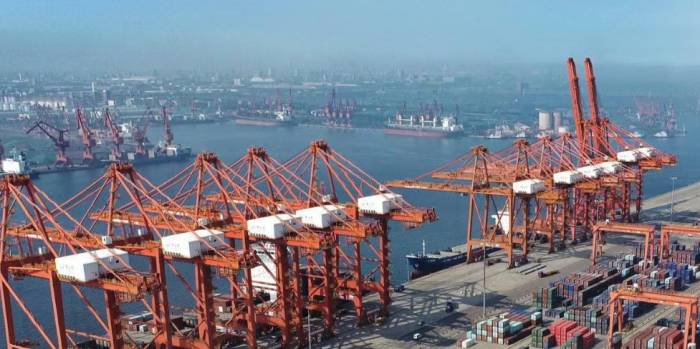
They try every means to restrict the development of China's technology and trade, attempting to maintain their dominant position in this way.
However, these tactics have long been seen through by China, and China is well prepared.
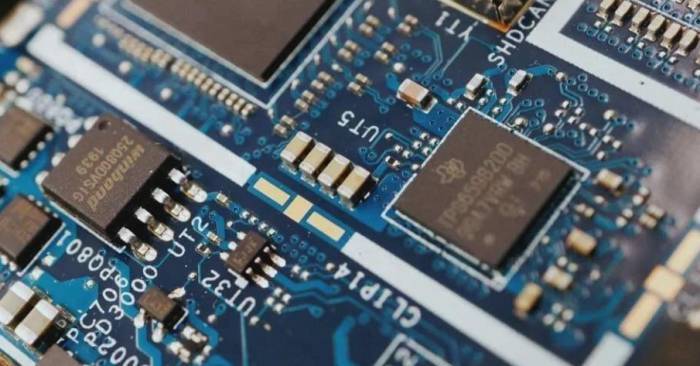
Companies like Huawei have made breakthroughs in the field of chips, and China's new energy vehicle industry chain is becoming more and more perfect.
It is increasingly difficult for the U.S. to strangle China's development through blockades.
The recent performance of the U.S. is not very good, which has made everyone see that it is not as powerful as it seems.
The once invincible superpower is now like a trapped beast, constantly revealing its ferocious face in the struggle.
Trump has been assassinated repeatedly, exposing the intensification of internal contradictions in the U.S.; Japan's betrayal of raising interest rates shows that the U.S.'s control over its allies is declining.
Those countries that once followed the U.S. are beginning to realize that clinging to the U.S.'s thigh can no longer bring a sense of security, and may become a victim of its declining hegemony.
The trend of multipolarity in the world is irreversible.
If the U.S. clings to power, it will only become more and more backward.
Those countries that attempt to maintain their hegemonic status through financial warfare, trade warfare, and technological warfare will only end up hurting themselves.
China will always be committed to peaceful development, working with countries around the world to jointly create a more fair and just international environment.
The world does not need a hegemonic country to issue orders, nor does it need a country to sacrifice the welfare of the world for its own interests.
The new era has arrived, and the old order will eventually be broken.








Join the Discussion