Although September has not yet ushered in autumn, the financial market is already a bit chilly.
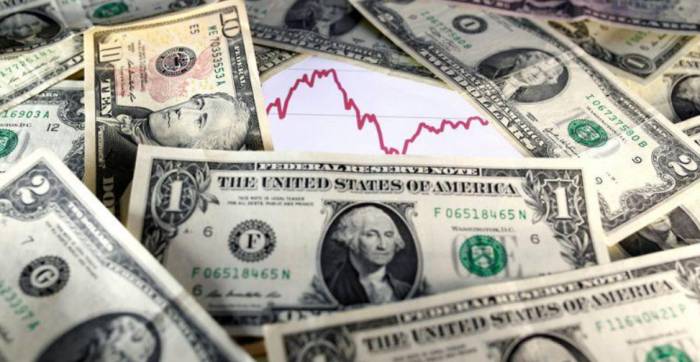
The Federal Reserve announced a rate cut, and as soon as the news came out, the global bond market immediately became lively, just like a calm water surface suddenly dropped a stone, causing ripples.
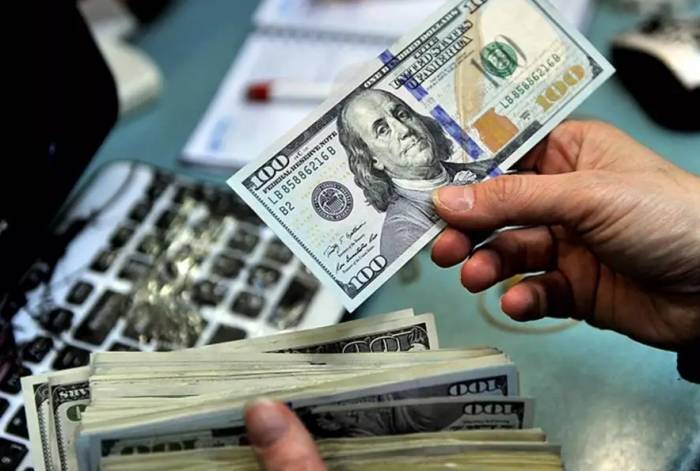
On this side, the United States is trying to save the precarious economy with the strong medicine of interest rate cuts; on the other side, China has been reducing its holdings of U.S. debt for several months in a row, expressing its concern about the prospects of the U.S. economy with practical actions.
On the stage of global debt, a silent game is underway.
The U.S. economy is not very good now, and in order to stimulate the economy, they are preparing to cut interest rates, which is like a big gamble.
It has to be said that the current U.S. economy has a bit of a "troubled inside and outside" situation.
Recently, the prices in the United States have risen too much, which feels like a roller coaster, catching people off guard, and many ordinary people are crying out in distress.
Economic growth has also become very bad, like a giant beast trapped in the mud, unable to move, without any strength.
What's more, the government debt of up to $35 trillion is like the Sword of Damocles hanging overhead, constantly reminding people that the "good times" of the U.S. economy seem to have come to an end.
Seeing the situation getting worse and worse, the Federal Reserve decided to try a trump card, cutting interest rates.
However, although this medicine can temporarily make the economy more active and make people feel better, in the long run, it will only get worse and eventually there will be a problem.
After all, cutting interest rates means that borrowing is easier, but the U.S. government is already heavily indebted, and if it continues to "borrow new to repay old," the scale of debt will only roll more and more like a snowball, and eventually drag the U.S. economy into the abyss.
Faced with the uncertainty of the U.S. economy, China has chosen to act cautiously.
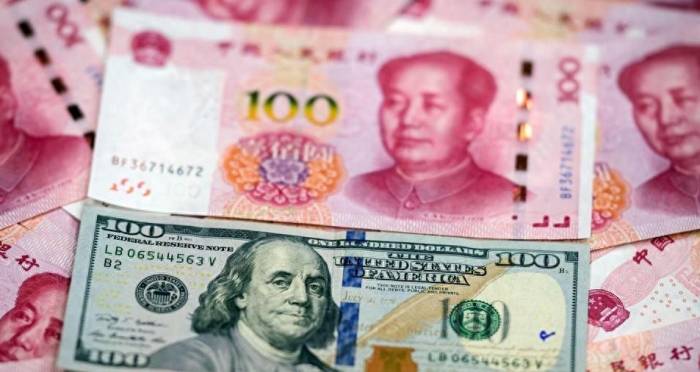
Data does not lie, since the beginning of 2024, China has accumulated a reduction of nearly $40 billion in U.S. Treasury bonds, and the holding scale has broken through the $1 trillion mark.
This continuous reduction undoubtedly sends out a clear signal: China is not as optimistic about the future of the U.S. economy as before.
China's reduction in holding U.S. debt is not an impulse, but a strategic choice after careful consideration.
To put it bluntly, eggs cannot be placed in the same basket, and it is too risky to put a huge amount of foreign exchange reserves on U.S. debt.
Instead of waiting to die, it is better to take the initiative, reduce risks through diversified allocation, and ensure the safety of foreign exchange reserves.
As a result, we see that China has begun to increase its holdings of gold, buy currencies of other countries, invest in overseas assets, and step by step build a more solid foreign exchange reserve system.
This is like playing a big chess game, every move is carefully planned, and there is only one goal: to safeguard national interests and ensure economic security.
Interestingly, in this "U.S. debt sell-off" wave, China is not the only "trendsetter".
People who used to buy U.S. debt wholeheartedly are now beginning to express their attitude with practical actions.
Japan, as the largest creditor of the United States, has always been a focus of attention.
Data shows that Japan has been reducing its holdings of U.S. debt for several months in a row, and the holding scale has reached a new low in recent years.
The reason is, in addition to worrying about the prospects of the U.S. economy, Japan's own needs are also a major factor.
In addition to Japan, the United Kingdom, France and other "stalwart allies" of the United States have also joined the ranks of reducing U.S. debt.
The logic behind this is actually very simple, that is, "seeking benefits and avoiding harm."
When the returns and risks of U.S. debt are not proportional, investors will naturally choose to "vote with their feet" and look for more secure and reliable investment targets.
This scene can't help but make people sigh, in front of interests, the so-called "alliance" relationship seems to be particularly fragile.
And just as the global debt market is changing, the China-U.S. economic working group meeting was held as scheduled.
Shang Bo, the U.S. Deputy Secretary of the Treasury, this Yale University Ph.D. in Economics, former White House economic advisor, with the mission of "alleviating the pressure of the U.S. debt market," once again set foot on Chinese soil.
However, the atmosphere at the conference table is far from as harmonious as imagined.
The United States once again resorted to the old trick, once again raising the big flag of "China's overcapacity," trying to use this as a chip to force China to increase its holdings of U.S. debt.
Naturally, China will not easily yield to this.
In fact, the so-called "China's overcapacity" is just an issue that the United States deliberately hyped for its own interests.
In the global market, Chinese-made products are still in short supply, and China's economy is still maintaining a steady growth trend, where is the "overcapacity"?
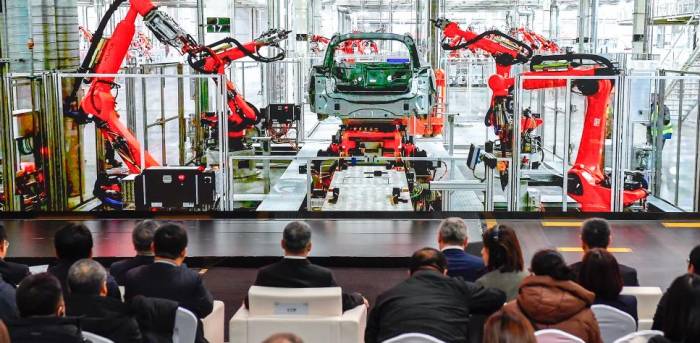
What is even more interesting is that just before Shang Bo's visit to China, the United States suddenly announced an increase in tariffs on China, involving electric vehicles, solar cells and other fields.
This "one face, one back" approach undoubtedly casts a shadow over China-U.S. economic and trade relations.
In fact, the United States is doing this, that is, to try to maintain its own economic status by suppressing China.
This is not good for oneself, but will harm oneself.
Now, the global debt issue is like a time bomb, which may detonate the world economy at any time.
In order to shift the crisis, the United States is not afraid to take measures such as interest rate cuts and trade protection, but it ignores the reality of global economic integration, and in the end it will only damage its own interests and intensify the turmoil of the global economy.
Faced with this unprecedented debt puzzle, no country can stand alone.
Only by abandoning the Cold War mentality and zero-sum game, strengthening international cooperation, and jointly facing challenges, can we find the key to solving the problem.
China has the confidence and strength to face any difficulties and challenges, we can be stable.
We will continue to maintain the pace of development, deepen reform and opening up, let the economy develop better, and make the world economy more stable and more vibrant.









Join the Discussion