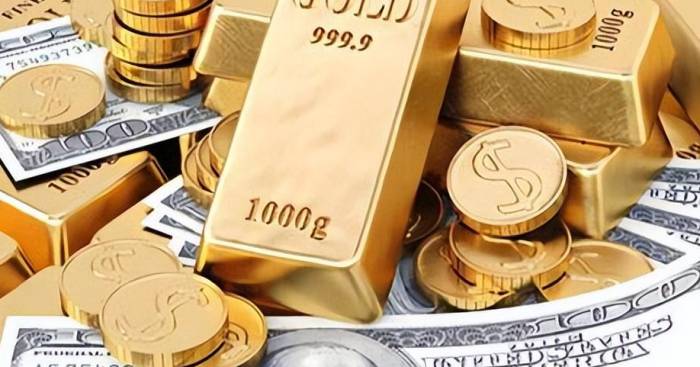
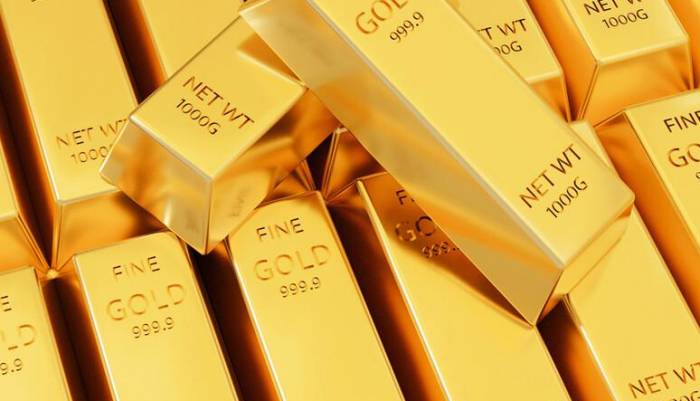
On March 20th, the price of gold broke through $2000 per ounce, setting a record high in nearly 11 months.
Since last week, the price of gold has risen by 6.5%, and the last time the price of gold surged by 6% was in March 2020, when the global economic recession triggered by the pandemic led to a market safe-haven sentiment, causing a significant increase in gold prices.
So, what caused the sudden surge in gold prices this time, and what exactly happened?
First, the most direct reason is the banking crisis in Europe and America.
Since the "meltdown" of Silicon Valley Bank in the United States, three banks have successively encountered problems.
In an effort to save the First Republic Bank in the United States, several major Wall Street banks have jointly injected $30 billion into it.
However, Credit Suisse in Europe also "melted down."
As the second-largest bank in Switzerland with a century of history, unlike the bankruptcy of Silicon Valley Bank, Credit Suisse's failure was due to capital flight, essentially a credit bankruptcy.
Once the banking crisis erupts in Europe and America, a large number of banks will collapse one after another, and a global financial crisis will be triggered.
Therefore, due to the current banking crisis in Europe and America, the short-term safe-haven sentiment has driven up the price of gold.
Second, the price of gold is closely related to the performance of the global economy.
When the global economic outlook is good, the price of gold tends to fall, and when global economic growth slows down, the price of gold will rise.
The interest rate hikes by the US Federal Reserve in 2022 had a significant impact on the world economy, with global trade on the decline, high inflation in Europe and America, weak consumption, export-oriented countries experiencing a decline in exports, and a reduction in orders.
The IMF has already lowered the global GDP growth target for 2023, and the global economy this year is not optimistic.
Third, the economic performance of the United States and the Federal Reserve's interest rate hikes also affect the price of gold.
Due to the banking crisis in Europe and America, the world is now closely watching whether the Federal Reserve will raise interest rates in March.
The key indicator data released by the United States is not as expected, indicating weak economic growth in the United States.
The market believes that the Federal Reserve will slow down interest rate hikes, and may even cut interest rates, and the market sentiment has lifted the price of gold.
Fourth, the continuous increase in gold holdings by central banks around the world is also an important basis for the significant increase in gold prices.
According to the latest data released by the World Gold Council, central banks around the world increased their gold holdings by 1136 tons in 2022, the highest level in 55 years.
In January 2023, central banks around the world bought 77 tons of gold, a month-on-month increase of over 190%.
Among them, the People's Bank of China has been increasing its gold holdings for four consecutive months, starting to buy gold in November 2022, and in February this year, China bought another 25 tons of gold.
So far, China's official gold reserves have exceeded 2000 tons.
At the same time, China has been reducing its holdings of US Treasury bonds for six consecutive months, and in January this year, China reduced its holdings by another $7.7 billion, bringing its holdings of US Treasury bonds to the lowest level in nearly 14 years.
Central banks around the world are now increasing their gold holdings on a large scale to hedge against the risks of the global financial market and to enhance the diversification of foreign exchange reserves.
Faced with the uncertainty of global economic growth and the risks in the international financial market caused by US interest rate hikes, it is very necessary for central banks around the world to increase their gold holdings.
So, is it necessary for ordinary people to allocate gold?
At this time, the high price of gold will further reduce the market's demand for gold.
Renowned economist Ma Guangyuan believes that ordinary people do not need to invest in gold.
Gold cannot even keep up with inflation, and its fluctuations are too large.
However, it is very necessary for countries to increase their gold reserves.















Join the Discussion