If you want the quick answer, it's China. By a massive margin. But if you stop there, you're missing the whole story. The question of which country has the largest trade surplus opens a window into global power dynamics, economic strategies, and vulnerabilities that affect everything from the price of your gadgets to geopolitical stability. It's not just a number on a spreadsheet; it's a reflection of who makes what, who buys what, and the complex financial flows that bind the world economy.
What You'll Find in This Guide
- What Exactly Is a Trade Surplus? (Beyond the Textbook Definition)
- The Undisputed Leader: China's Trade Surplus Dominance
- How China Maintains Its Massive Trade Surplus
- Global Trade Surplus Ranking: Who Else Makes the List?
- Is a Huge Trade Surplus Always a Good Thing? The Economic Impact
- Future Trends: Will China Always Be on Top?
- Your Burning Questions Answered (FAQ)
What Exactly Is a Trade Surplus? (Beyond the Textbook Definition)
Everyone says it's when a country exports more goods and services than it imports. True. But that's like saying a car is something with wheels. Let's get under the hood.
A trade surplus means money is flowing into the country from abroad. Think of it as the national version of your personal savings account growing because you earn more than you spend. This surplus becomes part of a broader measure called the current account surplus, which includes things like investment income and remittances. For countries like the one we're about to discuss, the trade in goods is the heavyweight champion of this surplus.
Here's the nuance most articles miss: a surplus isn't inherently "good," and a deficit isn't inherently "bad." It depends entirely on why it exists. Is it because you're a productivity powerhouse making things everyone wants? Or is it because your domestic economy is so weak that no one can afford to buy imports? The context is everything.
The Undisputed Leader: China's Trade Surplus Dominance
Let's cut to the chase. For nearly two decades, China has consistently held the title of the world's largest trade surplus nation. The scale is staggering.
In 2023, China's goods trade surplus was approximately $823 billion. To put that in perspective, that's larger than the entire annual economic output (GDP) of most countries, including Switzerland and Poland. The runner-up, Germany, had a surplus of around $300 billion. China's lead isn't just clear; it's overwhelming.
This isn't a new phenomenon. Since its accession to the World Trade Organization in 2001, China's surplus has ballooned, transforming it into the "world's factory." The numbers you see reported by sources like the World Trade Organization (WTO) and the International Monetary Fund (IMF) tell a story of relentless export growth. But the story behind the numbers is even more interesting.
What's in China's Surplus? It's Not Just Cheap Toys
The old image of China exporting solely cheap plastic goods is hopelessly outdated. The composition of its exports has shifted dramatically up the value chain.
The biggest drivers now are:
Electronics and Machinery: This is the king. Smartphones, computers, telecommunications equipment, and industrial machinery. Think of brands like Huawei, Xiaomi, and the countless components inside Apple products made in Chinese factories.
Consumer Goods: From furniture and apparel to toys and home appliances. The breadth is immense.
Medical and Tech Equipment: A growing segment, especially post-pandemic.
On the flip side, what does China import? It sucks in huge volumes of raw materials (iron ore, oil, copper), high-tech components (semiconductors from Taiwan and South Korea), and agricultural products (soybeans, meat). The pattern is clear: import raw materials and high-value parts, assemble and manufacture finished goods, export them globally.
How China Maintains Its Massive Trade Surplus
This scale doesn't happen by accident. It's the result of a deliberate, multi-decade strategy. Many analysts point to the currency, but that's only one piece of the puzzle.
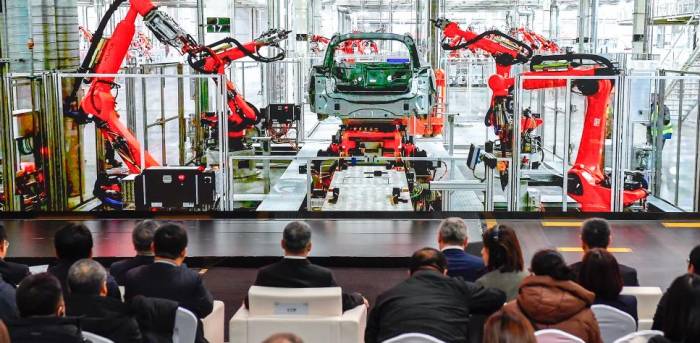
The Manufacturing Ecosystem: This is the core advantage. No other country has China's combination of scale, infrastructure (ports, roads, rail), and deeply integrated supply chains. Need a specialized screw, a custom mold, and circuit board assembly within a 50-mile radius? You can probably get it in the Pearl River Delta. This ecosystem lowers costs and speeds up production in a way that's incredibly hard to replicate.
State-Led Investment and Policy: The Chinese government has strategically invested in key industries, often through subsidies and favorable loans to state-owned enterprises. "Made in China 2025" is a blueprint to dominate advanced industries like robotics and electric vehicles.
Labor and Scale: While labor costs have risen, the sheer scale of the workforce and engineering talent pool remains a formidable advantage. It's not just about cheap labor anymore; it's about skilled, productive labor at a competitive cost.
The Currency Factor: For years, critics argued China kept the yuan artificially weak to boost exports. The picture is more complex now. The People's Bank of China manages the currency within a band, preventing wild swings that could hurt export stability. It's less about deliberate undervaluation today and more about managed stability.
Personally, I think the ecosystem argument is the most powerful one. You can move a factory to Vietnam for lower wages, but you can't move the entire network of suppliers, logistics, and skilled labor that surrounds it. That's China's moat.
Global Trade Surplus Ranking: Who Else Makes the List?
While China is in a league of its own, other countries run significant surpluses, often for very different reasons. Here's a snapshot based on recent IMF and national data.
| Country | Estimated Goods Trade Surplus (2023) | Primary Drivers of Surplus |
|---|---|---|
| 1. China | $823 billion | Manufactured goods (electronics, machinery, consumer goods) |
| 2. Germany | $300 billion | High-end machinery, vehicles, chemicals (the classic "export powerhouse") |
| 3. Russia | $283 billion | Hydrocarbons (oil, gas), weapons, raw materials |
| 4. Saudi Arabia | $221 billion | Crude oil and petroleum products |
| 5. Netherlands | $134 billion | Re-exports, agri-food, chemicals, machinery (Rotterdam port effect) |
| 6. Ireland | $121 billion | Pharmaceuticals, tech services (heavily influenced by multinationals) |
Notice the different models? Germany excels in high-quality engineering. Russia and Saudi Arabia are resource-based. The Netherlands is a trade and logistics hub. Ireland's figure is inflated by the accounting of global tech and pharma giants headquartered there. China's model is unique in its sheer breadth and volume across manufacturing.
This ranking can fluctuate with commodity prices. A year of high oil prices can push Russia or Saudi Arabia higher. A global recession that hits demand for cars can shrink Germany's surplus. But China's position at the top has shown remarkable resilience.
Is a Huge Trade Surplus Always a Good Thing? The Economic Impact
This is where it gets tricky. A surplus sounds great—money flowing in! But it creates its own set of challenges.
For China, the benefits are obvious: It generates enormous foreign exchange reserves (over $3 trillion), which provide a buffer against economic shocks. It fuels industrial growth, creates jobs, and has been the engine of its economic miracle.
Now, the downsides and tensions:
Global Imbalances and Trade Friction: The massive surplus with the United States (over $300 billion bilaterally) is a constant source of political tension. It fuels accusations of unfair practices, leading to tariffs and trade wars. The U.S. view, whether you agree with it or not, is that China's surplus suppresses manufacturing jobs abroad.
Currency and Inflation Pressures: All those dollars earned from exports need to be converted to yuan. This can put upward pressure on the Chinese currency, which the central bank then has to manage to avoid hurting exporters. It also complicates domestic monetary policy.
Over-reliance on External Demand: It makes the economy vulnerable to slowdowns in Europe, the US, and elsewhere. If the world stops buying, Chinese factories stall. This is a key reason China has been trying, with mixed success, to boost domestic consumption for years.
From a global perspective, persistent large surpluses in one region necessitate large deficits elsewhere (like the US). This can be a source of financial instability. The IMF regularly warns about the risks of such global imbalances.
Future Trends: Will China Always Be on Top?
The throne isn't necessarily permanent. Several forces are at work.
Geopolitical Decoupling/De-risking: Companies are under pressure to diversify supply chains away from China. "China Plus One" strategies are moving some production to India, Vietnam, Mexico, and elsewhere. This will slowly erode China's export share in certain categories.
Rising Domestic Costs and an Aging Population: Wages are rising, and the workforce is shrinking. The pure cost advantage is diminishing.
The Shift to a Consumption-Driven Model: If China succeeds in getting its own citizens to buy more, imports will rise, naturally reducing the trade surplus. This is a stated goal of the government, but it's a difficult transition.
Technological Competition: As China moves into advanced semiconductors and AI, it faces export controls from the US and allies, potentially capping growth in the highest-value export sectors.
My take? China will remain the country with the largest trade surplus for the foreseeable future—likely the next decade. But the gap will probably narrow. The surplus may shrink as a percentage of its own growing economy. The era of endless, explosive surplus growth is likely over, transitioning into a period of a large but managed surplus.