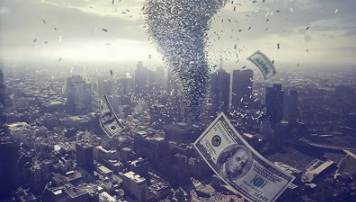
Let's cut through the academic jargon. When people ask about the negative role of the Federal Reserve, they're not wondering if it prints money. They're feeling it. They see housing prices they can't afford, a stock market that feels detached from Main Street, and a nagging sense that the rules of the economy are rigged. The Fed, for all its technical mandates, plays a central part in creating these realities. Its negative roles aren't accidents; they're often direct consequences of its core policies.
In This Deep Dive
I've followed monetary policy for over a decade, and the most common mistake is viewing the Fed as a simple thermostat for the economy. It's more like a complex, sometimes clumsy, engineer in a control room, pulling levers that have massive, unintended side effects downstream. We'll move beyond the surface-level "inflation vs. unemployment" debate and look at the concrete, often painful, outcomes of its actions.
1. The Asset Bubble Machine
The Fed's primary tool is interest rates. Lower rates to stimulate, raise them to cool things down. Sounds clean. The problem? Cheap money doesn't flow evenly. It floods into financial assets first—stocks, bonds, real estate. The 2008 crisis was a classic case: ultra-low rates post-9/11 fueled a housing bubble of epic proportions. The Fed missed it, famously focused on "core inflation" which excluded food and energy... and housing bubbles.
Fast forward to the 2010s. Near-zero rates and quantitative easing (QE)—literally creating money to buy bonds—pushed investors into riskier assets searching for yield. It inflated corporate debt, tech valuations, and again, housing. The COVID-19 response was a magnified version. The Fed's balance sheet ballooned, and markets roared while the real economy was on life support. This creates a perverse dependency. Markets now rise on bad economic news, expecting more Fed stimulus—a phenomenon traders call the "Fed put."
The real negative role here is distorting investment signals. Capital gets allocated not to the most productive ideas, but to the assets most sensitive to cheap debt. We get more speculative condo developments and less investment in factory machinery or basic R&D. It misdirects the entire economy's capital.
2. The Wealth Inequality Engine
This is the most socially corrosive negative effect. The Fed doesn't intend to widen the gap between rich and poor, but its policies are a turbocharger for inequality. Think about who benefits from low rates and QE.
- The Wealthy: They own financial assets. Stocks, bonds, investment properties. When the Fed pumps liquidity, these prices go up. Their net worth skyrockets.
- The Middle and Working Class: Their primary asset is their labor. Their wealth is often tied to a savings account (earning near-zero interest) and maybe a 401(k). While their 401(k) might grow, the proportional gain is smaller. Their real problem is wage growth, which has chronically lagged asset inflation for decades.
A study from the Brookings Institution has shown that monetary easing disproportionately boosts the portfolios of the top 10%. Meanwhile, the rising costs of essentials—exacerbated by the same policies—hit lower-income households hardest. The Fed creates a world where it's easier to get rich by owning assets than by working a job. That's a fundamental shift with deep social consequences, fueling the political polarization we see today.
The Expert's Take: A subtle point often missed is how the Fed's inflation target (Personal Consumption Expenditures or PCE) underweights housing costs, especially for owners. It uses "owner's equivalent rent," a theoretical measure. When housing prices detach from rents due to speculative buying (fueled by low rates), the official inflation data looks tame while the lived experience for anyone trying to buy a home is one of crushing inflation. The Fed is, in effect, looking at the wrong thermometer.
3. The Moral Hazard Creator
Moral hazard means taking on more risk because you believe you'll be rescued. The Fed has institutionalized this in finance. After the 2008 bailouts and the 2020 corporate bond-buying spree, the message is clear: major financial players and large corporations won't be allowed to fail catastrophically.
This distorts the entire system. Banks can operate with thinner cushions. Corporations load up on debt because they know the cost of borrowing will be kept artificially low, and in a crisis, the Fed might step in. This leads to a more fragile, over-leveraged economy. The "creative destruction" of capitalism—where bad firms fail, freeing up resources for better ones—gets short-circuited. We end up propping up "zombie companies" that should have folded, which drags down overall productivity growth.
My view? The Fed's role as "lender of last resort" has morphed into "buyer of last resort" and "backstop for everything." This removes the essential feedback of fear from the market, which is a critical discipline mechanism.
4. The Price Signal Distorter
Prices in a free market are information. They tell us what's scarce, what's in demand, and guide resources. The Fed's manipulation of the most important price in the economy—the cost of money (interest rates)—muddies these signals.
| Market Signal | How the Fed Distorts It | Real-World Consequence |
|---|---|---|
| Risk Assessment | Artificially low rates make risky projects appear profitable. | Capital flows into shaky ventures (e.g., speculative oil drilling, unprofitable tech startups) that would not be funded in a normal rate environment. |
| Savings vs. Consumption | Punishing savers with near-zero returns discourages saving. | People are pushed to spend or gamble in risky assets instead of building secure cash reserves, reducing long-term financial resilience. |
| Time Preference | Cheap money encourages short-term financial engineering over long-term investment. | Companies prioritize stock buybacks (boosted by cheap debt) over capital expenditures and R&D that drive future growth. |
The economy loses its natural calibration mechanism. We can't tell if a sector is booming because of genuine innovation or just free money. This leads to massive malinvestment, the cleanup of which—when rates eventually rise—is always painful.
5. The Political Accountability Problem
The Federal Reserve is technically independent, but let's be real. Its actions have massive political ramifications. By controlling the business cycle's tempo, it profoundly influences election outcomes. A Fed tightening cycle can tip the economy into recession before an election; a dovish stance can create a short-term "sugar high" of growth.
The negative role is the democratic deficit. Powerful officials who are not elected (the Fed Chair and Board of Governors) make decisions that affect every citizen's job prospects, mortgage payment, and retirement account. Their mandates—maximum employment and stable prices—are incredibly broad and open to interpretation. This grants them enormous discretionary power with limited direct accountability.
Furthermore, its close ties with the large Wall Street banks it regulates—the infamous "revolving door"—create a perception, and often a reality, of regulatory capture. Its policies often seem designed to calm Wall Street first and ask questions about Main Street later. This erodes public trust in both the financial system and public institutions.
Tough Questions on the Fed's Impact
Understanding the Federal Reserve's negative roles isn't about conspiracy theories. It's about recognizing the inevitable trade-offs and unintended consequences of wielding such powerful, blunt tools in a complex economy. The Fed walks a tightrope, and its missteps aren't mere academic errors—they translate directly into unaffordable homes, volatile job markets, and a system that feels rigged. The first step toward demanding better policy is seeing the full picture, costs and all.