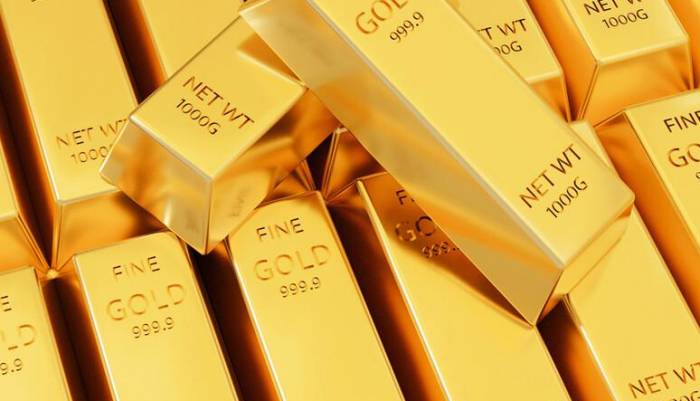
Gold possesses the characteristic of risk aversion.
In today's era of credit-based currencies, the financial attributes of gold have always been present and are one of the assets in the foreign exchange reserves of central banks around the world.
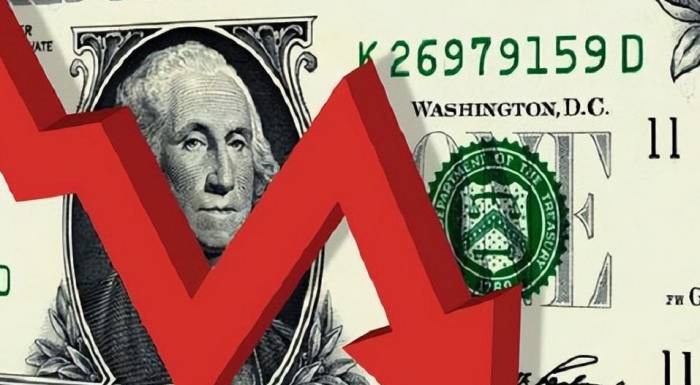
Amidst a decline in the credit of the US dollar, gold plays a role in hedging against the credit of the dollar.
Central banks globally will significantly increase their gold holdings to maintain currency stability and enhance financial risk resistance.
Currently, the United States has the highest gold reserves in the world, amounting to 8,133 tons.
After World War II, the United States led the famous Bretton Woods Conference.
Due to the strong position of the US at that time, the world's monetary system centered around the US dollar was ultimately established, with the dollar directly linked to gold.
Therefore, for the convenience of gold transactions, various countries stored some of their gold in the United States.
However, this did not last long.
Later, the dollar was decoupled from gold.
Despite some countries demanding the return of their gold, a large amount still remains in the United States.
To this day, the US gold reserves remain the highest globally.
Among the top ten gold-holding countries, European nations hold a significant portion of gold reserves.
Germany's gold reserves amount to 3,355 tons, ranking second in the world and first in Europe.
In Germany's foreign exchange reserves, gold accounts for as much as 65%.
Even if the euro exchange rate collapses, Germany can use its gold reserves to invest in other currencies.
Italy's gold reserves stand at 2,451 tons, ranking third globally, with gold accounting for 63% of its foreign exchange reserves.
France's gold reserves are 2,436 tons, placing it fourth globally, and gold constitutes 58.4% of France's foreign exchange reserves.
It can be observed that Germany, Italy, and France have a strong preference for gold, with a very high proportion of gold in their foreign exchange reserves.
Russia's gold reserves are 2,298 tons, ranking fifth globally, with gold accounting for 20% of Russia's foreign exchange reserves, significantly lower than that of Germany, France, and Italy.
However, Russia's preference for gold has greatly increased.
Having sold off its US Treasury bonds, Russia has been increasing its gold holdings in recent years and also increasing the proportion of RMB assets in its foreign exchange reserves.
In 2022, due to escalating regional conflicts, Russia intensified its efforts to "de-dollarize" and began "de-euroization," increasing its gold holdings.
Since 2014, Russia has been the largest buyer in the global gold market, increasing the proportion of gold in its foreign exchange reserves to avoid or reduce the impact of sanctions.
So, how much gold does China officially hold?
Data shows that since 2022, China has also increased its gold holdings.
In November 2022, it increased its holdings by 32 tons, and in December by 30 tons.
By the end of 2022, China's gold reserves exceeded 2,000 tons for the first time, reaching 2,010 tons, ranking sixth globally.
Amidst a significant increase in gold holdings, China is also accelerating the sale of US Treasury bonds.
Data from the US Treasury's report on capital flows shows that in 2022, China and Japan, the two largest holders of US debt, both made moves to sell off US Treasury bonds, with China selling $173.2 billion worth of US debt last year.
After selling off US debt, the significant increase in gold holdings has sent an unusual signal.
Since last year, the US dollar's interest rate hikes have profoundly affected the global economy, and the credit of the dollar has declined again.
At this time, increasing gold holdings can enhance the diversified allocation of foreign exchange reserves, maintain the stability of the domestic currency, and improve the currency's dependence on the US dollar.
In fact, the proportion of gold in China's foreign exchange reserves is only about 3%-4%.
Now, China is increasing its emphasis on gold, and it can be anticipated that in the future, China will continue to reduce its holdings of US debt while increasing gold holdings, further increasing the proportion of gold in its foreign exchange reserves.
The top ten gold-holding countries globally are: the United States, Germany, Italy, France, Russia, China, Switzerland, Japan, India, and the Netherlands.
Among them, Japan, as the world's third-largest economy, has a surprising 846 tons of gold reserves, ranking eighth globally.
Looking at the global situation, central banks of various countries have increased their gold holdings last year to hedge against the potential crisis brought about by the decline in the credit of the US dollar.












Join the Discussion